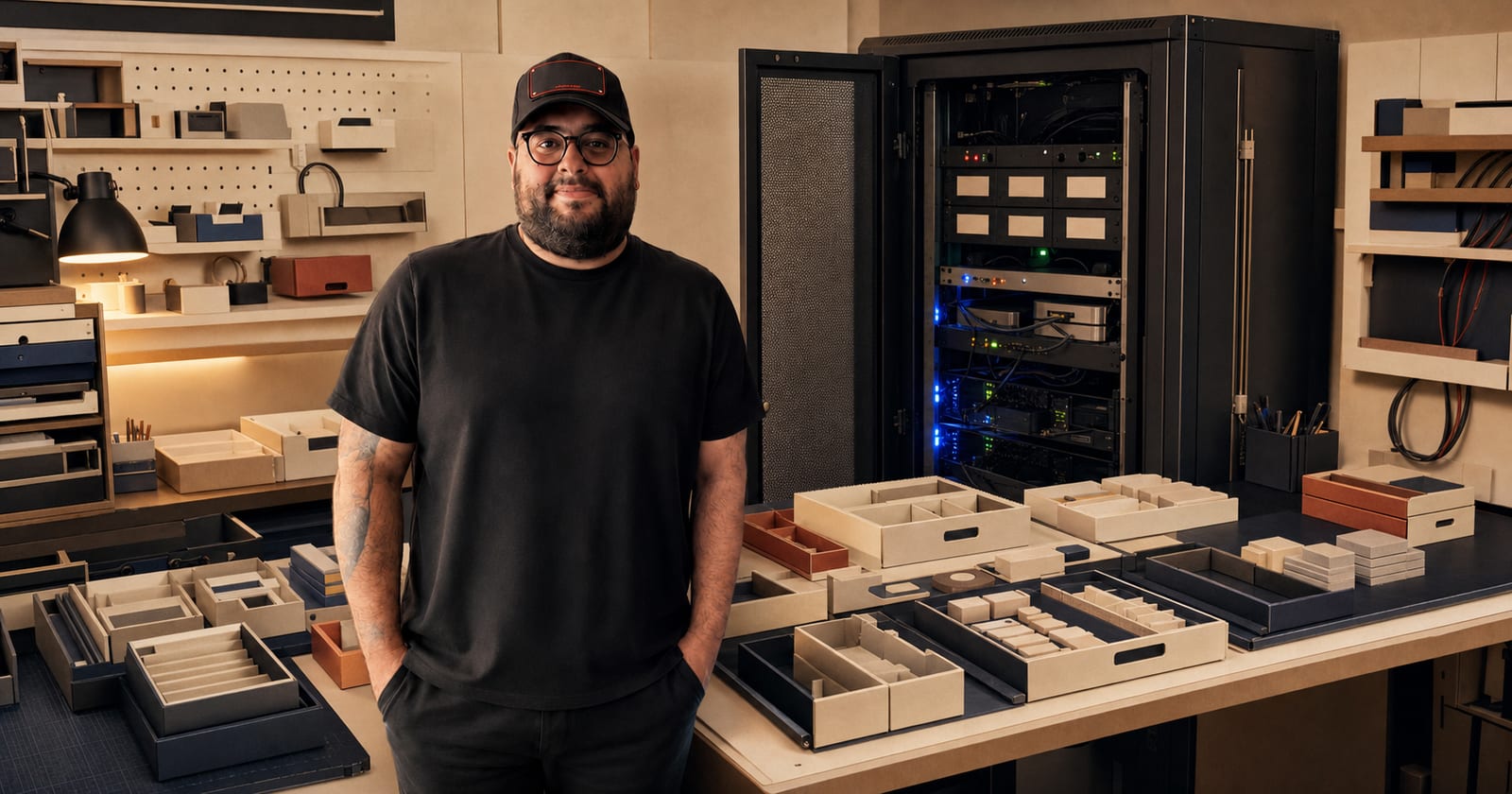
Alican Kiraz does not keep his engineering work behind a polished summary. Models, datasets, repositories, articles, and teaching material make much of it available for other people to inspect.
He is a senior staff security engineer at Trendyol. His submitted biography also describes sustained work on Turkish-language resources and models for specialized domains. The useful thread is not the number of artifacts. It is the habit of turning experience into something another practitioner can test.
Security work grounded in operations
Alican says he has worked in cybersecurity since 2015, with a focus on Blue Team and Purple Team work since 2018. Those labels can stay abstract, but his writing makes the operational concerns clearer.
In an English-language incident-response series for Trendyol Tech, he begins with preparation: knowing the systems that matter, deciding who owns which response, collecting usable logs, and improving the process after an incident.
That is not glamorous work. It is also where security succeeds or fails. A detection rule cannot help if the required evidence was never collected, and a response plan is weak if nobody knows who can make a decision under pressure.
Publishing the artifacts
Alican’s GitHub profile spans developer-security tooling, Turkish AI reading resources, benchmarking work, and software for training compact models. His Hugging Face profile adds publicly available models, datasets, and demos across Turkish-language and cybersecurity use cases.
We are deliberately not turning benchmark positions or download counts into claims about quality. Those numbers change, and each result depends on the test behind it. The more durable fact is that the work is exposed. Other people can examine a dataset, run a model, question an evaluation, or build a different experiment from it.
That makes public artifacts more than a portfolio. They create a path for disagreement and improvement.
Teaching the setup, not only the result
Alican also writes and teaches. His 2025 book, Training LLM Models with Transformers, covers the practical steps around a training environment, dataset preparation, and common model-adaptation tools.
The same pattern appears across his security courses and technical articles. The material spends time on setup and constraints, which are usually the parts removed from a short success story. Sharing them gives another engineer a better chance of reproducing the work and recognizing where their own environment differs.
We are happy to welcome Alican to the first LatentShift edition in İstanbul on 17 October. Before then, you can explore his work on GitHub, Hugging Face, or Medium.